
Guidelines
- Focus and scope
- Covered Topics
- Document Types Published
- Open access policy
- Submission and preparation of documents
- Nomenclature
- Structure and format of the Articles
- Documentary typology
- Title
- Authors
- Affiliation(s)
- Correspondence
- Abstract
- Keywords
- Declaration of conflict of interest
- Declaration of authorship contributions
- Funding source
- Declaration of use of generative AI or AI-assisted technologies
- Data declaration
- Introduction
- Materials and Methods
- Results and Discussion
- Conclusions
- Acknowledgments
- Footnotes
- Abbreviations
- Bibliography
- Audiovisual materials
- Supplementary material
- Additional considerations
- Other mandatory reference journal policies
⇑ Focus and scope
Mission and Objective
Agricultura Tropical is a digital scientific-technical journal. It is edited since 2015 by the Instituto de Investigaciones de Viandas Tropicales, an institution that guarantees the quality and relevance of the published content. The journal publishes its contents in Spanish and English, aiming to achieve greater dissemination and impact within the international scientific community. All works submitted for publication must be original and must not have been previously published in any other medium. Its fundamental mission is to disseminate scientific advances and original research results in the field of tropical agriculture, with a special emphasis on crops of interest for food security. The journal's main objective is to serve as a high-level academic and technical communication channel, publishing unpublished articles that contribute to knowledge, innovation, and the sustainable development of the production of roots, rhizomes, tubers, plantains, fruits, vegetables, and grains. The publication is made for one volume per year (January-December) with a Continuous Publication system (Rolling Pass). The approved documents are published as soon as the arbitration and conformation processes are concluded.
Target Audience
The journal is aimed at a broad audience linked to the agricultural and scientific sectors, including:
-
Scientists and researchers.
-
Professors and university teachers.
-
Specialists and agricultural institution technicians.
-
Managers and decision-makers in the agricultural sector.
-
Undergraduate and postgraduate students.
-
Producers and farmers interested in the practical application of science.
The content aims to keep this audience informed about the main results of science and technology applied to improving tropical agriculture.
⇑ Covered Topics
The journal welcomes works that address, as a priority but not exclusively, the following thematic areas applied to the crops of interest (roots, rhizomes, tubers, plantains, fruits, vegetables, and grains):
-
Plant Breeding and Plant Genetic Resources: Conservation, characterization, and use of biodiversity to obtain new varieties.
-
Plant Biotechnology: Application of biotechnological techniques for crop improvement and propagation.
-
Pest Management: Agroecological and conventional strategies for controlling diseases, insects, and weeds.
-
Plant Nutrition: Soil fertility management and fertilization for efficient and sustainable production.
-
Crop Management for Sustainable Agriculture: Agronomic practices that promote resilience, environmental sustainability, and productivity.
-
Participatory Research, Local Innovation, and Agrarian Extension: Experiences and methodologies that link science with local knowledge and technology transfer.
-
Harvesting, Post-Harvest, and Marketing: Management of products after collection, their conservation, processing, and commercialization.
-
Bioinformatics: Application of computational tools for the analysis of biological and genomic data in agriculture.
⇑ Document Types Published
To ensure the dissemination of various research and knowledge formats, the journal accepts unpublished contributions in the following categories:
-
Original Articles: Documents that present, in detail, the complete results of completed research projects. They are the cornerstone of the publication.
-
Short Communications: Brief reports describing preliminary results, novel findings, or technical data of immediate interest to the scientific community.
-
Literature Reviews (or Review Articles): Critical and exhaustive analyses of recent scientific literature on a specific topic, allowing for a synthesis of the state of the art and proposing future perspectives.
-
Thesis Abstracts: Publication of abstracts of master's or doctoral theses defended and related to the journal's themes, to make the research carried out by young scientists visible.
⇑ Open access policy
This journal provides immediate open access to its content, based on the principle that offering the public free access to research helps a greater global exchange of knowledge and thus meets the definition of Open Access of the Initiative of Budapest Open Access:
By "open access" to [peer-reviewed scientific literature], we mean their free availability on the public Internet, allowing any user to read, download, copy, distribute, print, search or use them for any lawful purpose, without any financial barrier, legal or technical, apart from those that are inseparable from those involved in accessing the Internet itself. The only limitation on reproduction and distribution, and the only role of copyright in this domain, should be to give authors control over the integrity of their works and the right to be properly credited and cited.
The journal does not impose article processing costs, shipping costs, or any other required charges on authors. Our mission is to support greater global knowledge sharing by making the research published in this journal open to the public and reusable under the terms of the Creative Commons Attribution-NonCommercial 4.0 Creative Commons License.
⇑ Submission and preparation of documents
Documents must be submitted electronically to the following address: agriculturatropical@edicionescervantes.com. The documents must be prepared according to the following template: https://edicionescervantes.com/recursos/plantilla-en.docx. Texts must be presented in a single column and the text format must be kept as simple as possible. Italics, bold, subscripts, exponents, etc. may be used. Equations and tables must be submitted in editable format prepared with the editing tools offered by MS Word or other professional processors. If a grid is not used, use the tab key and not spaces to align the columns.
The sheet must be set up in letter size 28 x 21.5 with 2.5 cm margins, 1.5 spaces (including summary, footnotes and references). Each line of text must be numbered (use the MS Word page format, line numbering option). With the page format options described above, each page must include 25 lines. The pages of the manuscript should be numbered, including the title, references and tables; however, references to the page number should not be made in the text if it is necessary to refer to sections of the text. Avoid excessive use of italics and underlining to emphasize parts of the text.
The writing style should be completely impersonal (third person), with criteria of accuracy, brevity and paragraphs between three and five sentences. The decimal metric system should be used. Scientific names should be written in italics and in full, including the author's name when they are first mentioned (example: Leucoptera coffeella Guerin Meneville). If it is necessary to use them in several parts of the text, then they should be written in full the first time they appear and then abbreviated (example: L. coffeella).
⇑ Nomenclature
- Authors and editors are obliged to follow the international codes governing biological nomenclature (International Code of Botanical Nomenclature, International Code of Nomenclature of Bacteria, International Code of Zoological Nomenclature, Index Fungorum, etc.).
- All biotic groups (crops, plants, insects, birds, mammals, etc.) must be identified by their scientific names.
- All biocides and other organic compounds must be identified by their Geneva name when they are named for the first time in the text. The active ingredients of all formulations included in the reports must also be identified.
- For chemical nomenclature, the conventions of the International Union of Pure Chemistry and the recommendations of the IUPAC-IUB Combined Commission on biochemical nomenclature must be followed.
⇑ Structure and format of the Articles
Articles should be divided into clearly defined sections. The sections and their fundamental characteristics are presented below.
⇑ Documentary typology
It must be aligned to the right and the exact documentary typology that the journal has defined must be used (e.g. Original Article).
⇑ Title
- Must be concise and able to make the reader aware of the essential content of the article.
- Its maximum length should be 15 words.
- It should not be overloaded with information in the form of abbreviations, symbols , formulas or unknown characters, and place where the study was carried out.
- It should not be a double meaning or literary phrase.
- Eliminate subtitles and all non-specific words.
- In your writing you should use a neutral approach writing style, that is, you should not suggest the result that is going to be obtained.
⇑ Authors
- The journal prohibits and sanctions guest authorship and similar practices in scientific and academic production processes.
- The name of each author must be accompanied by a number or character indicating which affiliation it belongs to and if it is the corresponding author.
- ORCID record. Authors who do not yet have this identifier can enable one at https://orcid.org/register
- Authors will be considered those who are represented in the CRediT – Contributor Roles Taxonomy (https://credit.niso .org/)
- Consult our authorship and contribution policy at the address: https://agriculturatropical.edicionescervantes.com/index.php/inivit/authorship
⇑ Affiliation(s)
- Each affiliation will present the number or character that relates it to one or more authors /es.
- The editor must ensure that each affiliation presents at least the standardized name of the institution and the country to which it belongs.
- To standardize or search the names of the affiliations, suggests using the services: ROR (https://ror.org/search) and Wayta (http://wayta.scielo.org/ )
⇑ Correspondence
- The name must be defined of the corresponding author(s) and the active email account.
⇑ Abstract
- Must be the abbreviated representation of the content of the document.
- You must summarize in a maximum of 250 words the central aspects included in each of the sections of the document, so that you can: establish the problem, interest and objective of the research. It should describe, without details, the materials chosen and the methods used, and summarize the main results (only these), as well as state the main conclusions.
- Reference should not be made to figures, tables and bibliographical citations. . You should not include information that is not described in the work, nor begin with the objective without first having stated the problematic situation.
- Although a graphical summary is optional, its use is recommended as it draws more attention to the online article. The graphical summary should summarize the content of the article in a concise pictorial form designed to capture the attention of a broad readership. The graphical summary should have a clear beginning and end, preferably "reading" from top to bottom or left to right. Try to reduce distracting and cluttering items as much as possible. Please provide an image with a minimum size of 1328 x 531 pixels (width x height) with a minimum resolution of 300 dpi. The preferred file types are SVG, PNG, PDF or MS Office files.
To compose a graphic summary you can use the template: visual-abstract.pptx
You can also check the publications: https://doi.org/10.1016/j.semnephrol.2020.04.008 and https://doi.org/10.1016/j.bjps.2020.08.054
Or view the conference: https://www.youtube.com/watch? v=CzSvC6ZtS1I
⇑ Keywords
- They designate and identify the most important aspects discussed in the article. They serve to locate information of interest and create databases and subject indexes. They will be written from 3 to 10 maximum in order of importance to reflect the content of the document.
- For the standardization of keywords it is recommended to use services such as: AGROVOC https://www.fao.org/agrovoc/es/search
⇑ Declaration of conflict of interest
This declaration must be presented in each work even if the authors have no interest in competence to declare In this declaration the authors of the research must choose one of the following scenarios:
- The authors declare that they have no competing financial interests or known personal relationships that could have influenced the work presented in this paper.
- The author is a member of the editorial board/editor-in-chief/associate editor/guest editor of the journal and was not involved in the editorial review or decision to publish this article.
- The authors declare the following financial interests/personal relationships that may be considered potentially competing interests: … (Examples of potential conflicts of interest include employment, consultancies, stock ownership, honoraria, paid expert testimony, applications/ patent registrations and grants or other funds) …
⇑ Declaration of authorship contributions
- The participation of all authors of the document will be collected.
- Participation roles will be established as provided in the taxonomy CRediT – Contributor Roles Taxonomy (https://credit.niso.org/)
- When the document has a single author, it will not be necessary to establish the declaration of authorship contributions.
⇑ Source of financing
You are asked to identify who provided financial support for the conduct of the research or preparation of the article and to briefly describe the role of the sponsors, if any, in the design of the study; in the collection, analysis and interpretation of data; in writing the report; and in the decision to submit the article for publication. If the financing source(s) did not have such participation, it is recommended to indicate this. Example:
- This work was supported by the National Institutes of Health [grant numbers xxxx, yyyy]; the Bill & Melinda Gates Foundation, Seattle, WA [grant number zzzz]; and the United States Institutes of Peace [grant number yyyy].
It is not necessary to include detailed descriptions about the program or type of scholarships and awards. When funding comes from a block grant or other resources available to a university, college, or other research institution, submit the name of the institute or organization that provided the funding.
If not specified has provided funding for the research, it is recommended that you include the following sentence:
- This research did not receive any specific grant from funding agencies in the public, commercial or not-for-profit sector.
⇑ Declaration of use of generative AI or AI-assisted technologies
- It will be established only in those cases where it applies.
- See our policy on the use of generative AI and AI-assisted technologies: https://agriculturatropical.edicionescervantes.com/index.php/inivit/ia
⇑ Data declaration
- This journal requires and allows you to share data that supports the publication of your research where appropriate, and allows you to interconnect the data with your published articles.
- Research data refers to the results of observations or experimentation that validate research findings, which may also include data files, software, code, models, algorithms, protocols, methods, and other useful materials related to the research.
- You will have the opportunity to provide a statement of data during the shipping process. The statement will appear with your published article.
⇑ Introduction
- It will be brief, try to use the main keywords and will go from general to specific.
- In it you must establish the contextual framework in which the problem to be solved is inserted, what is known and what is unknown about the issue in question, what the research would represent economically, socially, technologically and scientifically, and the objective of the work with the that must close.
- You can also use the three-paragraph outline, where the first paragraph will present the background, in the second the why it is necessary to study the problem, and in the third the objective.
⇑ Materials and Methods
- It must provide sufficient information so that the research can be replicated, and unnecessary descriptions must be avoided.
- The materials used must be mentioned. They quantitatively or qualitatively determined the obtaining of the data, not the instruments used.
- In relation to the methods, three possible scenarios must be taken into account:
- When the method is standard, simply mention it and include the bibliographic reference.
- When the method is not standard but has been used before, discuss why it is necessary to use it and put the bibliographic reference where the method is described.
- When the method has been generated or adapted for the study, describe it completely or at least the transformed part.
- This section of Materials and Methods can be organized into 6 areas that contemplate:
- Environment: Indicates where the study has been done.
- Design: Describes the design of the experiment.
- Variables and treatments: Dependent or independent variables. Main treatment, combined, sequential and control.
- Sample and sampling: Characterizes the sample and how its selection and taking.
- Interventions: Describes the techniques, methods, measurements and units, equipment and technology.
- Statistical analysis: Indicates the statistical programs and methods used. The programs are referenced.
- The subtitles used to name the areas are freely selected by the authors, examples: General conditions, Treatments, Measurements, Statistical Analysis.
⇑ Results and Discussion
- You should never show data that is not clearly related to the objective of the work.
- The research data is shown in figures and tables, which must be self-contained. explanatory and marked with titles and legends.
- While the table provides precision, the figures provide a clearer visual impact of the effects of the treatments and of trends and interactions.
- Both Central elements of the discussion are to indicate, with neutral judgment and some speculation, what the findings mean and how these findings relate to what was known until then.
- In the discussion, data from the studies should not be repeated. figures and tables.
- Make clear the principles, relationships and extrapolations that could be derived from the results (speculations). Exceptions must be highlighted.
- Indicate how the results and their interpretations agree with, or conflict with, other scientific research.
- Present the theoretical implications of the work and the practical applications it could have.
- Figures must have a minimum resolution of 300 dpi, and must be inserted in the body of the text after their first mention. It is recommended that each figure present a consecutively numbered figure caption. Example:
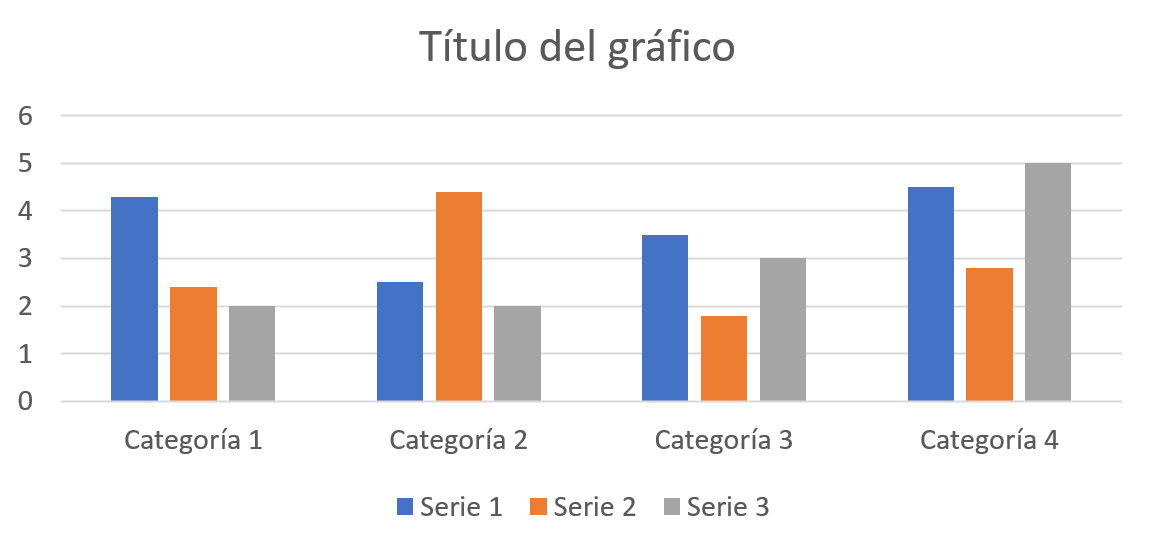
Figure 1. Description of the image caption.
- The tables will be inserted in the body of the text after their first mention and must be editable (and not as images). It is recommended to use a consecutively numbered table header. If you use MS Word, use the table layout: "Table with grid". Example:
Table 1. Table header description.
|
Estaciones |
Viento máximo sostenido promediados en 10 min. |
Racha máxima |
||
|
Día /Hora (Z) |
Velocidad (Km/h) |
Día /Hora (Z) |
Velocidad (Km/h) |
|
|
Bahía Honda |
08 /20:35 |
40 |
08 /20:35 |
78 |
|
Güira de Melena |
09 /03:25 |
30 |
09 /04:05 |
70 |
|
Bauta |
09 /01:40 |
25 |
09 /04:40 |
63 |
Source: Prepared by Cervantes (2019)
- Equations and terms must be presented in editable format (not images) built with MathType or with the equation editor Word. Example:
x=-b±b2-4ac2a
- The nomenclatures and units of measurements used must follow the internationally accepted rules and conventions for the treatment of units of measurements such as International System of Units (SI).
⇑ Conclusions
- They should highlight the main implications of the data obtained in the research and not make a statistical count of the values shown.
- In all cases the conclusions must be justified by the data presented and respond to the proposed objectives.
⇑ Acknowledgments
- Collate the acknowledgments in one section separated at the end of the article before the bibliography and therefore do not include them on the home page, as a footnote to the title or otherwise. List here those people who provided help during the research (e.g., providing language help, assistance with writing or proofreading the article, etc.).
⇑ Footnotes
- Footnotes page layouts should be used sparingly. Number them consecutively throughout the article. Many word processors can incorporate footnotes into the text and you can use this feature. Otherwise, indicate the position of the footnotes in the text and list the footnotes separately at the end of the article. Do not include footnotes in the reference list.
⇑ Abbreviations
- Define non-standard abbreviations in list form and within this section.
- Make sure abbreviations are consistent throughout the article.
⇑ Bibliography
In the section, it is very common that the metadata of the documents used are incomplete and are not presented with the homogeneity established by the APA standard, which is the style bibliographical of the journal. In this way, in the arbitration processes various errors are detected due to omission of elements such as: date of publication, publishers and responsible institutions, standardized identifiers (ISSN, ISBN, DOI), places of publication, pages and electronic addresses. On the other hand, the names of the authors are placed incorrectly and grammatical errors occur in the writing of the titles.
To homogenize and facilitate the preparation of citations in the text and the bibliography, it is recommended to use the bibliographic manager Zotero and the citation style processor of the CSL journal (for its acronym in English) American Psychological Association that can be downloaded from the address https://www.zotero .org/styles/apa-single-spaced.
It is mandatory to incorporate the permanent or persistent identifier in each reference (Cu-ID, DOI, Handle, among others) as long as one has been assigned. To find these permanent identifiers, it is recommended to use the following services:
To prepare the different types of documents, edited and published works must be used such as: articles from scientific journals, books, book chapters, articles in conferences (conferences, symposiums, seminars, workshops and events, of which at least the proceedings have been published), patents and standards, reports from recognized institutions with international prestige (FAO, UNESCO, among others) that present the corresponding standardized identifier (ISBN, ISSN or DOI), maps and satellite images, legal resources and computer programs. Regardless of this range of possibilities, to prepare any type of document, articles in scientific journals should be used to a greater extent since these constitute the central unit of science to issue its results.
On the other hand, the use of the following sources should be limited: theses (when published in the form of scientific articles or books), newspaper articles, interviews, audiovisual documents, electronic documents not indexed in databases of scientific journals, web pages (less certain statistical sites). Self-citations, both from the author himself and from the journal, should not exceed 20% of the literature consulted.
Within the text, citations are made in the form author-year (e.g. Cervantes , 2016) by placing a comma “,” between the author's last name and the year of publication. If the citation is made up of two authors, the signature surnames of each one are placed separated by the symbol “&” and then the year (e.g. Cervantes & Alfonso, 2016). In cases where the citation is made up of more than two authors, “et al.” should be placed in italics after the last name of the main author followed by the year (e.g. Cervantes et al ., 2016). If the same author(s) with more than one publication in the same year is cited separately in the body of the work, the works must be differentiated by placing the letters “a”, “b” as appropriate (e.g. Cervantes < i>et al., 2016a, b). In cases where a corporate author is cited, the abbreviated form of the name must be included (e.g. FAO, 2016).
If the citation is made up of multiple sources, that is, For more than one job, a semicolon “;” must be used. to separate each one (e.g. Cervantes, 2014; Alfonso, 2015; Alonso, 2016). Citations to multiple sources that present the same authors, but different years of publication, will be placed using the last name of the main author, according to the different forms mentioned above, followed by the years separated by a comma “,” (e.g. Cervantes, 2015; 2016).
Below are some examples of bibliographic references generated according to the style of the journal:
Articles in scientific journals
Li, Y. L., McAllister, T. A., Beauchemin, K. A., He, M. L., McKinnon, J. J., & Yang, W.Z. (2011). Substitution of wheat dried distillers grains with solubles for barley grain or barley silage in feedlot cattle diets: Intake, digestibility, and ruminal fermentation1. Journal of Animal Science, 89(8), 2491–2501. https://doi.org/10.2527/jas.2010-3418
Books
Azcón-Bieto, J. (2013). Fundamentals of plant physiology (M. Talón, Ed.; Second). McGraw-Hill Spain.
Standards and Patents
Secretary of the Environment and Natural Resources. (2002). Specifications of fertility, salinity and soil classification. Studies, sampling and analysis(Official Gazette of the Federation Patent NOM-021-SEMARNAT-2000). http://www.semarnat.gob.mx/node/18
Computer Programs
SAS Institute. (2010). Statistical Analysis Software SAS/STAT® (9.0.2) [Computer software]. SAS Institute Inc. http://www.sas.com/en_us/software/analytics /stat.html
Reports
Uribe, F., Zuluaga, A. F., Valencia , L., Murgueitio, E., Zapata, A., Solarte, L., & Soto, R.B. (2011). Establishment and management of silvopastoral systems (Sustainable Colombian livestock project; p. 78). GEF-World Bank-FEDEGAN-CIPAV-Action Fund-TN. http://www.cipav.org.co /pdf/1.Establishment.and.management.of.SSP.pdf
Thesis
Allen, M. E. (1976). Kolmogorov-Smirnov test for discrete distributions [Master Thesis, Naval Postgraduate School]. http://calhoun.nps.edu/handle/10945/17830
Maps
López, L. J. A., Vicente, B. J. M., Blasco, F., Mallén, D., & Saz, D. (2012). GR 11 Pyrenean Path from sea to sea (7th ed.) [Long Distance Trails, 1:40 000]. Prames S.A. https://www.amazon.es/Gr-11-Senda-Pirenaica-Senderos-Recorrido/dp/8483218399?ie=UTF8& ;camp=3626&creative=24790&creativeASIN=8483218399&linkCode=as2&redirect=true&ref_=as_li_tf_tl&tag=travesiapiren-21
Pages Web
ONEI (National Office of Statistics and Information). (2014). Territory; Agriculture, Livestock, Forestry and Fishing. Statistical Yearbook of Cuba. http://www.one.cu/aec2013/20080618index.htm
Section of a Book
Rivera, R., Fernández, F., Fernández, K., Ruiz, L. , Sánchez, C., & Riera, M. (2006). Advances in the management of effective arbuscular mycorrhizal symbiosis in tropical ecosystems. In C. Hamel & C. Plenchette (Eds.), Mycorrhizae in Crop Production (pp. 151–196). Haworth Food & Agricultural Products Press. http://www.amazon.com/Mycorrhizae-Crop-Production-Science /dp/1560223073
Conference Articles (Conferences, Symposium, Seminars, Workshops and Events)
Fita, A., Postma, J., Picó, B., Nuez, F., & Lynch, J. (2008). Root architecture variation in Cucurbita (M. Pitrat, Ed.; pp. 487–491). INRA-Centre de Recherche d’Avignon-Unité Génétique et Amélioration des Fruits et Légumes. https://w3.avignon.inra.fr/dspace/handle/2174/254
⇑ Audiovisual materials
Mission and Objective
Agricultura Tropical is a digital scientific-technical journal. It is edited since 2015 by the Instituto de Investigaciones de Viandas Tropicales, an institution that guarantees the quality and relevance of the published content. The journal publishes its contents in Spanish and English, aiming to achieve greater dissemination and impact within the international scientific community. All works submitted for publication must be original and must not have been previously published in any other medium. Its fundamental mission is to disseminate scientific advances and original research results in the field of tropical agriculture, with a special emphasis on crops of interest for food security. The journal's main objective is to serve as a high-level academic and technical communication channel, publishing unpublished articles that contribute to knowledge, innovation, and the sustainable development of the production of roots, rhizomes, tubers, plantains, fruits, vegetables, and grains. The publication is made for one volume per year (January-December) with a Continuous Publication system (Rolling Pass). The approved documents are published as soon as the arbitration and conformation processes are concluded.
Target Audience
The journal is aimed at a broad audience linked to the agricultural and scientific sectors, including:
-
Scientists and researchers.
-
Professors and university teachers.
-
Specialists and agricultural institution technicians.
-
Managers and decision-makers in the agricultural sector.
-
Undergraduate and postgraduate students.
-
Producers and farmers interested in the practical application of science.
The content aims to keep this audience informed about the main results of science and technology applied to improving tropical agriculture.
Covered Topics
The journal welcomes works that address, as a priority but not exclusively, the following thematic areas applied to the crops of interest (roots, rhizomes, tubers, plantains, fruits, vegetables, and grains):
-
Plant Breeding and Plant Genetic Resources: Conservation, characterization, and use of biodiversity to obtain new varieties.
-
Plant Biotechnology: Application of biotechnological techniques for crop improvement and propagation.
-
Pest Management: Agroecological and conventional strategies for controlling diseases, insects, and weeds.
-
Plant Nutrition: Soil fertility management and fertilization for efficient and sustainable production.
-
Crop Management for Sustainable Agriculture: Agronomic practices that promote resilience, environmental sustainability, and productivity.
-
Participatory Research, Local Innovation, and Agrarian Extension: Experiences and methodologies that link science with local knowledge and technology transfer.
-
Harvesting, Post-Harvest, and Marketing: Management of products after collection, their conservation, processing, and commercialization.
-
Bioinformatics: Application of computational tools for the analysis of biological and genomic data in agriculture.
Document Types Published
To ensure the dissemination of various research and knowledge formats, the journal accepts unpublished contributions in the following categories:
-
Original Articles: Documents that present, in detail, the complete results of completed research projects. They are the cornerstone of the publication.
-
Short Communications: Brief reports describing preliminary results, novel findings, or technical data of immediate interest to the scientific community.
-
Literature Reviews (or Review Articles): Critical and exhaustive analyses of recent scientific literature on a specific topic, allowing for a synthesis of the state of the art and proposing future perspectives.
-
Thesis Abstracts: Publication of abstracts of master's or doctoral theses defended and related to the journal's themes, to make the research carried out by young scientists visible.
⇑ Supplementary material
Supplementary material, such as applications, datasets, images, audiovisual materials, among others, can be published with your article to improve it. Submitted supplemental materials are posted exactly as received (Excel or PowerPoint files will appear as such online). Submit your material along with the article and provide a concise, descriptive title for each supplemental file. If you wish to make changes to the supplemental material during any stage of the process, please be sure to provide an updated file.
⇑ Additional considerations
- The manuscript must be checked for spelling and grammar.
- It must be submitted together with the document, permissions to use copyrighted material from other sources (including the Internet).
⇑ Other policies of the mandatory reference journal